

History and Tradition
The History of Attars
Attars are fragrances derived from flowers, herbs, and spices. The word “attar” comes from an old Persian term for perfume, itir. a word which itself derives from ‘itr (عطر) the Arabic word for perfume, pronounced as “ațr” or “atir.” The word referred to any pleasant fragrance emanating from a person, thing, or plant. A fitting name to describe these fragrances which create a presence by the wearer.
Attars have origins in Indus Valley and The Ancient Egyptians, the oldest civilizations. The Ancient Indus Valley using clay pots called degs. The Ancient Egyptians were famous for using plants and flowers to formula perfumes. These perfumes where then added to oils. These processes where later refined during the Islamic Era. Ibn Sina was the first to derive attar of a roses and other plants by distillation. Though the techniques are attributed to Ibn Al-Baitar and his teacher Al-Abbas Al-Nabati. The first person to develop attars isn’t as important as where. The ancient regions of the near east and Indus river valley have the strongest claim.
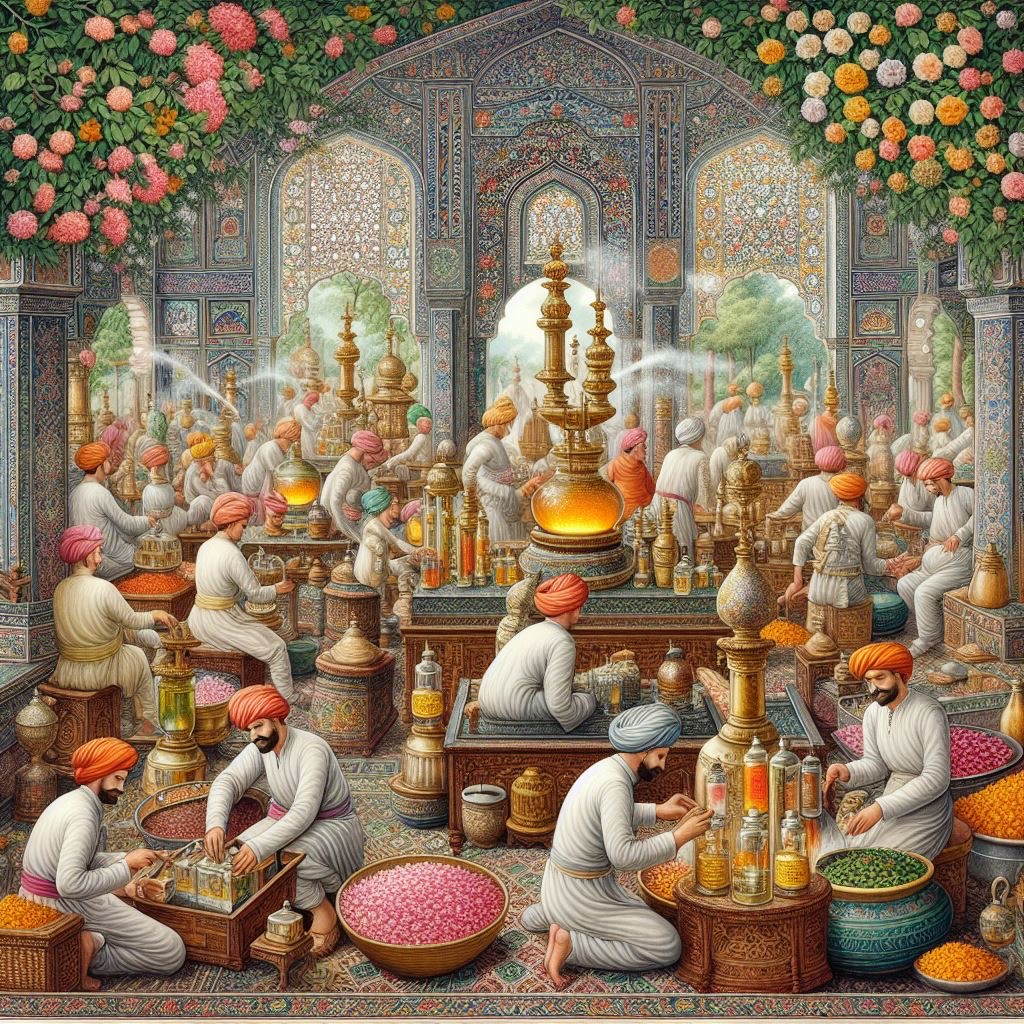
Perfumers in Kannauj have been producing Attars for generations. referring to it as “liquid gold.” The city lies in northeastern India near the Ganges. The region uses hydrodistillation method or steam distillation to produce attars. These practice truly began with the Mughals. A Persianized Turco-Mongol Empire that ruled India for 3 centuries. They would award attar makers, known as Attar Wallah; prestige and money for their efforts. This gave birth to a golden age of Attar. One report credits the mother-in-law of Jahangir with accidentally discovered Rose Attar. Kannauj, India is the center of this history. Attars from Kannauj fall under “Geographical Indication” under Indian law.
Traditional Kannauj Attars

Attar is an old-world perfumery rooted in tradition. Modern perfumes are made with alcohol. While attars are often distilled into a wood base such as sandalwood. Aged for several months or years. Kannauji attars take upto 15 days and are either based with sandalwood or rose. The scent of a droplet can linger on the skin for days. Rose based last far longer and have stronger green notes. These fragrances can strike intense floral, woodsy, musky, smoky, or grassy notes. Often appealing to both men and women. Kannauj produces various attars, including:
- Rose Attar: Made from Damask roses.
- Jasmine Attar: made from pure jasmine extract. Provides a sweet and floral scent that is both calming and uplifting.
- Mitti Attar: Evokes the scent of earth after rainfall. Thanks to baked alluvial clay used during distillation.
- Shamama: A blend of 40 or more flowers, herbs, and resins that takes days to make and months to age. Its harmonious scent combines sweet, spice, smoke, and dampness.
- Henna Attar: Coming from the Henna flowers with other spices. used for its medicinal properties and has a spicy, warming, and refreshing smell.
- Musk Attar: Often a base of musk mixed with a sweet amber or rose taking on a sweet or woodsy smell
The Process

- Damask Roses are grown in alluvial soils surrounding the city. Where expert hand pluck at their peak.
- Deg-Bhapka Method: The traditional attar-making process involves steam distillation. Flower petals and other fragrant materials are placed in large pots called degs. Water is then heated while steam passes through the flower petals kept in the vessel. The oils from the petals are carried via a wooden beam. It is collected in a vessel known as the bhapka, resulting in the aromatic attar.
Revival and Renaissance
Although attars fell out of fashion in the 20th century due to rising cost and changing tastes. These Fragrant oils are now trending back with many notable brands. At Pure hayat we hope to do our part. Our partner is from a family who has been producing these scents for generations in Kannauj. His quality and history shines through our wonderful selections. Purchasing a fragrance from us isn’t simply buying a scent. It is joining the rulers of India, Egypt, and beyond by supporting this rich tradition of Attar wallah.

Leave a Reply to 8 Powerful Attars for Men – Pure HayatCancel reply